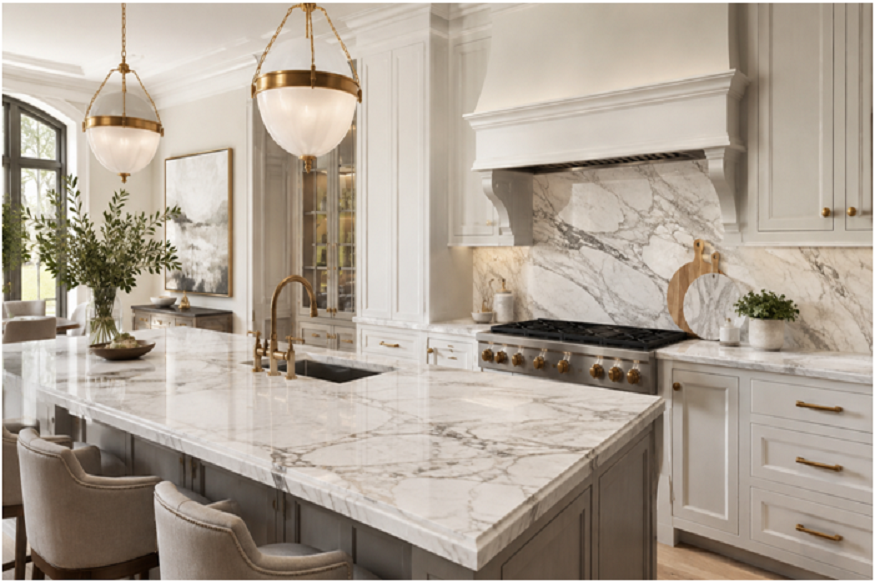
Marble has a visual character that is difficult to copy exactly. Each slab contains natural movement, veins, and color variations that give the surface its own identity. Therefore, I see marble as more than a basic countertop material. It can become an important part of the kitchen’s overall design. However, homeowners should also understand how marble behaves before choosing it. For homeowners in Milwaukee, the best results come from balancing beauty, care requirements, cabinet colors, lighting, and daily use.
Begin With the Natural Look of Marble
I first look at the amount of movement in the slab. Some marble has soft, quiet veining, while other slabs contain bold lines and dramatic contrast. Therefore, the right choice depends on how much visual attention the countertop should receive. When I consider marble for kitchen countertops, I also think about how the kitchen will be used. Marble can develop natural signs of use over time, so homeowners should understand its care needs before selecting it. However, many people appreciate the character and patina that natural stone can develop. As a result, lifestyle matters just as much as appearance. I also compare the marble with the cabinet finish. A beautiful slab can still feel out of place if its undertones fight the rest of the room.
Key Takeaways
- Choose marble based on both natural beauty and the way the kitchen functions each day.
- View the full slab because natural veining and color can change across the surface.
- Keep nearby materials simpler when the marble has strong movement.
Choose the Right Color Direction
Read More: Why Flat Panel Cabinets Are Ideal for Modern Kitchen Designs
Marble appears in many color families. White and gray remain common choices, but some slabs include cream, gold, beige, green, or darker movement. Therefore, I focus on undertones. A warm marble can work beautifully with natural wood and brass hardware. Meanwhile, cooler white-and-gray stone may fit gray cabinets, black accents, and stainless appliances. The goal is not to match every material exactly. Instead, I look for colors that support one another.
Pair Marble With White Cabinets
White cabinets create a classic background for marble. However, I still compare the exact whites. A bright white cabinet can emphasize gray veins. Meanwhile, a warmer off-white cabinet may connect better with cream or gold movement. Therefore, I never rely on the word “white” alone. Actual samples reveal whether the two surfaces work together.
Use Wood Cabinets for Warmth
Natural wood can soften the cool appearance of some marble. Therefore, this combination often creates a balanced kitchen. Light oak may work with soft white marble, while richer wood tones can connect with cream or warm-veined slabs. However, both wood and marble contain natural movement. As a result, I avoid selecting two surfaces that compete strongly for attention.
Consider the Island as a Focal Point
A kitchen island offers a large surface where marble can make a strong visual statement. Therefore, some homeowners use marble on the island even when the perimeter countertops use another material. This can create contrast while keeping the most dramatic stone in one focused area. However, I still connect the island to the rest of the room through cabinet color, hardware, flooring, or backsplash details.
Choose the Backsplash Carefully
Marble often contains enough pattern to lead the design. Therefore, I usually keep the backsplash simple when the countertop has strong veining. Plain tile can create a quiet background. Meanwhile, a matching marble backsplash can create a seamless, high-end appearance. Both approaches can work. However, I avoid combining too many strong patterns because the room can quickly feel busy.
Work With a Knowledgeable Supplier
Natural marble requires careful slab selection, fabrication, seam planning, and installation. Therefore, I value working with a knowledgeable local countertop store that can explain the available stone and the practical requirements of the project. I also ask to view full slabs whenever possible. Small samples may not show the complete pattern or natural variation. Clear communication helps me understand where major veins may appear after fabrication. As a result, the final countertop layout can look more intentional.
Think About Sealing and Care
Marble requires thoughtful care because it is a natural stone. Therefore, homeowners should ask about sealing and cleaning before installation. I recommend using appropriate cleaners and wiping spills promptly. Acidic liquids can affect marble, so routine habits matter. However, care does not have to feel complicated. Once homeowners understand the material, they can build simple habits around it.
Consider the Edge Profile
The countertop edge influences the kitchen’s overall character. Therefore, I choose it according to the cabinet style and design direction. A simple edge can make marble feel clean and modern. Meanwhile, a more detailed profile can support a traditional kitchen. However, elaborate edges may also add fabrication cost. As a result, I balance visual impact with the project budget.
Coordinate With Flooring
Flooring covers a large part of the room, so it can influence how marble appears. Warm wood flooring may soften a cool white slab. Meanwhile, light tile can create a brighter, more seamless look. Therefore, I compare the two materials under the same lighting conditions. I do not try to match them exactly. Instead, I look for compatible undertones that keep the room connected.
Use Lighting to Highlight the Stone
Lighting can reveal the depth and movement of marble. Therefore, I plan both natural and artificial light carefully. Pendant lights can highlight an island, while under-cabinet lighting can bring attention to perimeter countertops. However, bulb temperature also matters. Warm bulbs can make cream and gold movement stronger, while cooler bulbs may emphasize gray veins.
Balance Marble With Hardware
Hardware provides a small but useful way to connect colors. Brass can highlight warm details in the stone. Meanwhile, black hardware can echo darker veins. Polished nickel or stainless finishes often create a neutral connection. Therefore, I use these small elements to repeat colors already present in the marble. This repetition helps the kitchen feel more intentional.
Think About Daily Use
I never recommend choosing marble based only on photos. Homeowners should think about how they cook, clean, entertain, and use the kitchen each day. A busy family may have different expectations than someone who cooks less frequently. Therefore, understanding maintenance tolerance matters. For Milwaukee homeowners who love natural stone, marble can work beautifully when expectations match the material.
Use Marble in Smaller Areas
Homeowners do not need to use marble across every countertop to enjoy its appearance. For example, a baking station, island, or small bar area can provide a focused place for the stone. Therefore, partial use can help control both cost and maintenance. It can also create a more layered design because the marble becomes a feature rather than a background surface.
View the Full Slab Before Fabrication
Natural marble can change from one end of the slab to the other. Therefore, I view the full piece whenever possible. I also discuss which areas I want to highlight. A dramatic vein may look excellent on an island, while a quieter section may work better near a sink. This planning gives the fabricator clearer design goals and can improve the finished appearance.
Keep Long-Term Style in Mind
Marble has appeared in kitchens for generations. Therefore, it can fit both traditional and modern interiors. However, the surrounding materials determine whether the room feels timeless or tied to a short-lived trend. For Milwaukee kitchens, I often favor balanced cabinetry, simple hardware, and carefully chosen lighting so the natural stone remains the main visual feature.
Read More: Best Countertop Colors for Making Small Kitchens Look Bigger
Final Thoughts
Marble can create a kitchen with warmth, movement, and natural elegance. However, successful results require more than selecting a beautiful slab. I consider cabinet color, flooring, lighting, backsplash, hardware, maintenance, edge style, and daily routine before making the final choice. In addition, I view the full slab so I understand the natural variation. Ultimately, marble works best when homeowners appreciate both its beauty and its natural character. With thoughtful planning, it can become a lasting focal point that gives the kitchen a refined and personal appearance.
About the Author